Runway Scorecard
ARR Is the Scoreboard. Runway Is the Shot Clock.
The seven numbers that tell SaaS founders whether they are actually winning, or just putting points on the board while the clock quietly runs out.
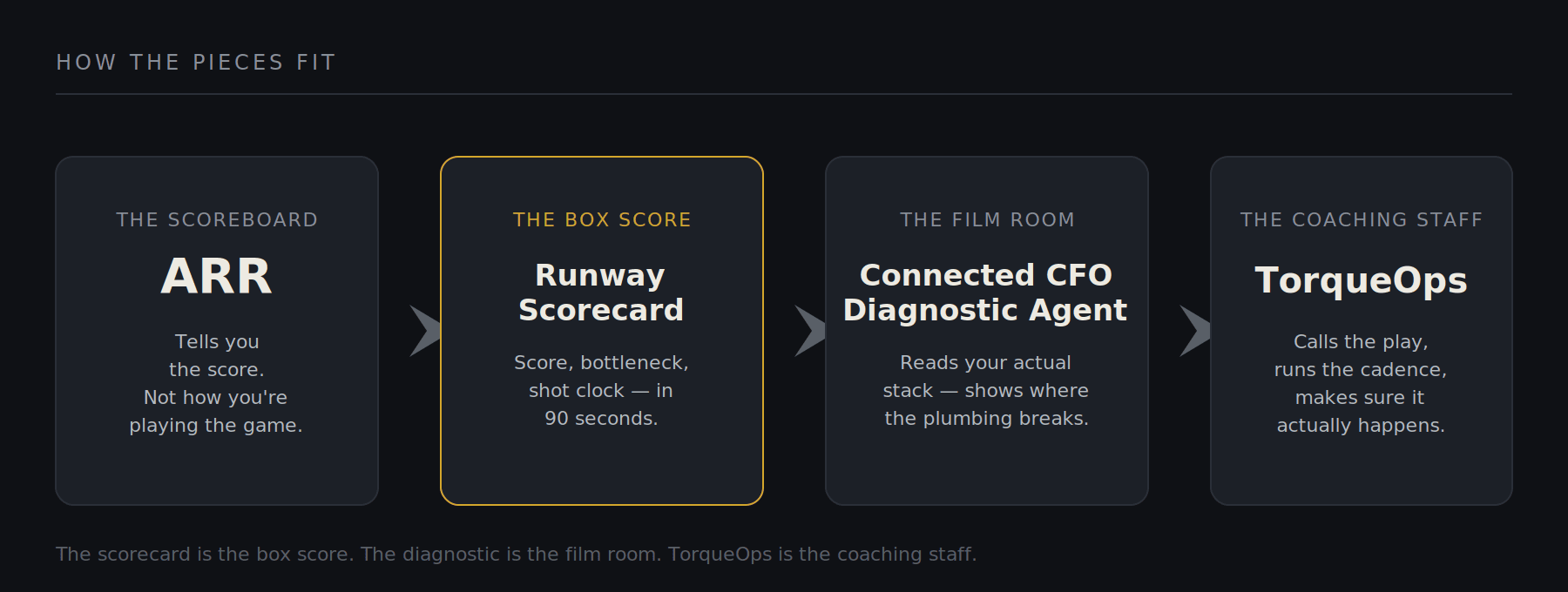
The scoreboard does not tell you how much time is left.
Most founders can tell you ARR. Fewer can tell you whether growth is efficient enough, whether the burn is buying durable revenue, or whether the next hire gives the company more runway or less.
That is the gap the Runway Scorecard is built for. It takes seven operating numbers and turns them into a simple founder question: are we moving the ball with enough time, cash, and margin to keep playing our game?
ARR tells you the score. Runway tells you how many possessions you have left.
The seven numbers
These are not vanity metrics. They are the game film. Together they show whether the company is building operating leverage or just buying revenue with cash.
You have the right KPIs. Now what?
A scorecard tells you what is true. It does not run your business. That distinction matters, because this is where a lot of founder-led companies stall out. They get the diagnosis, nod at it, and nothing actually changes next quarter.
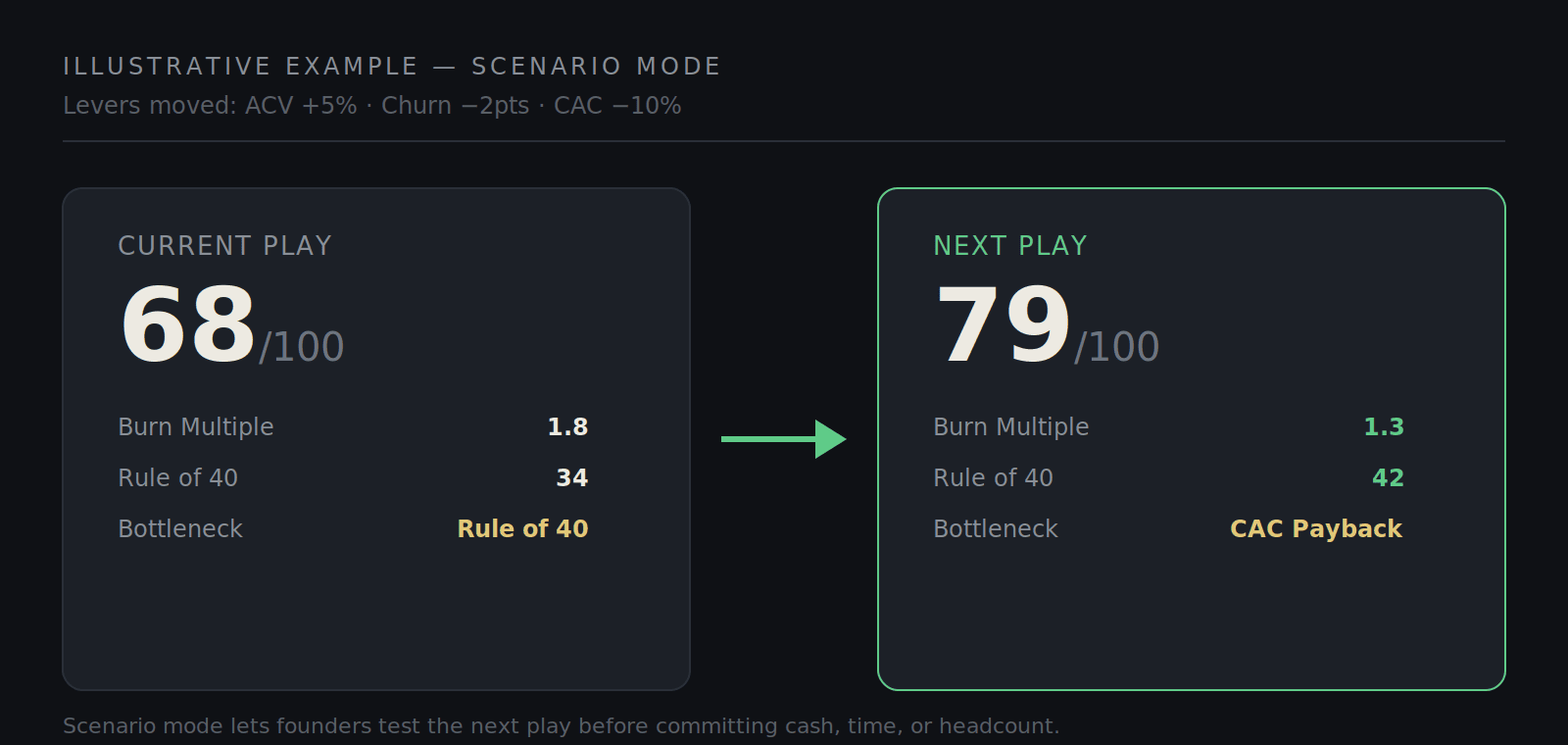
Knowing your Rule of 40 is 34 instead of 40 is data. Turning that into a different decision by next Tuesday is judgment. That is the job of a CFO who operates the business instead of one who reports on it after the fact.
The Scorecard may show Rule of 40 is the constraint. Fixing it means finance, GTM, and product data actually talk to each other so next quarter's number moves without a midnight spreadsheet scramble.
Monthly reviews often recap what happened. That is the rearview mirror. Weekly forecast reviews, MBRs, and QBRs should ask what happens next and why the team is aligned.
When the numbers are working, protect momentum. When a metric drifts from the company commitment, name it plainly and force the right conversation before the next quarter gets away.
That is the real difference between a bookkeeper and a CFO. One keeps score. The other tells you what to do about the score and makes sure it actually happens.
Where Profit Meets Execution
Do not just read the scoreboard.
Run the Scorecard, see the bottleneck, and decide which play needs to change before the next board meeting, hiring plan, pricing decision, or fundraising conversation.